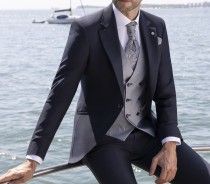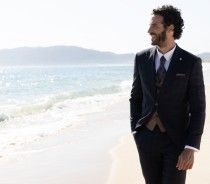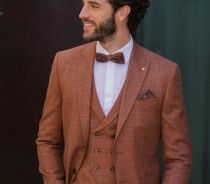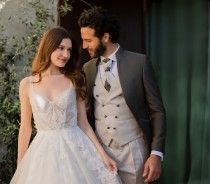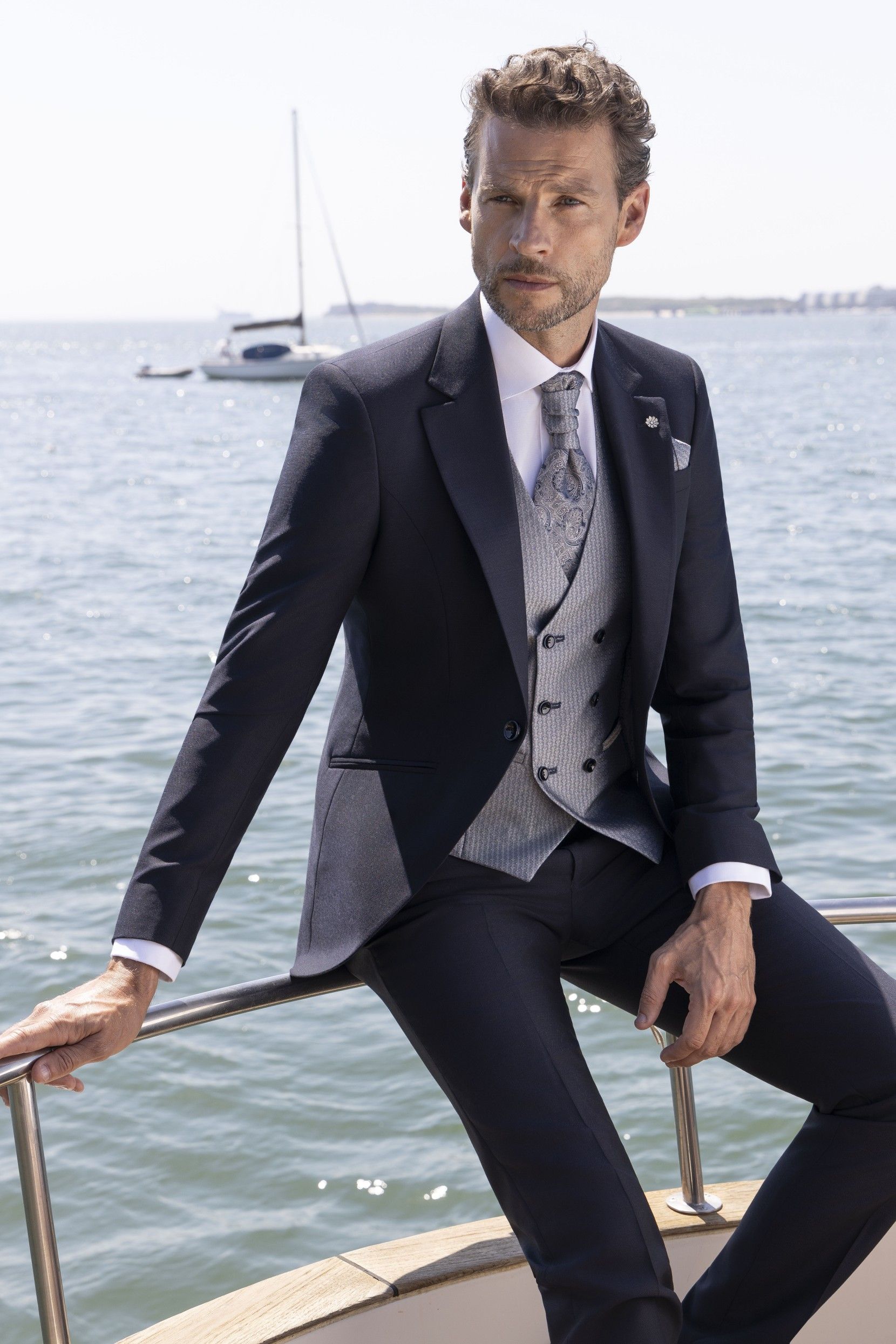
That is the starting point for From the sea, the new chapter of Roberto Vicentti's From collection. Last month we began at home, in Portugal. This month we walk to the edge of it, where the land runs out, the Atlantic begins and couples come to say yes. And we ask a simple question: what does a man wear when the backdrop is bigger than anything he could ever put on?
The answer is not less. It is smarter. If you are planning a wedding by the water next year, this is the season to decide, and these are the decisions that matter.
Start with the light, not the trend
By the sea, the light is stronger. It bounces off the water and the sand, flattens anything heavy and exaggerates anything harsh. Very dark suits soak up the heat and can read as severe in daytime photographs, which is why black is best left for the city and the evening.
The colours that work are the ones that already belong to the place. Sand, stone and ivory sit naturally against the beach. Light and dusty blues echo the sea and the sky without competing with them. Navy remains the confident choice for the groom who wants a little more authority, provided it comes in a cloth light enough for the day. Blue or sand? It is the question we keep asking, and there is no wrong answer. There is only the wrong weight of cloth.


Choose a fabric that breathes and holds its line
Linen is the classic seaside fabric for good reason. It breathes, it feels cool and it looks at home by the water. It also creases, quickly and visibly. The groom who loves linen accepts that as part of its charm. The groom who doesn't should look at blends: linen mixed with wool or cotton keeps much of the breathability and far fewer of the creases.
Lightweight wool is the quiet alternative. A tropical or high-twist wool, typically around 220 to 240 grams per metre, lets the air through, recovers its shape and keeps a sharp line from the ceremony to the last dance. Whatever you choose, leave the dense, heavy suitings to the winter office. On a hot afternoon, they trap the heat and show it.
Keep the shoulder, lose the weight
Seaside weddings invite softness: unstructured or half-lined jackets, lighter canvases, less padding. All of it helps you stay cool. But a groom still needs a line. The breeze off the water will lift and pull at a jacket that has nothing holding it in place, and the photographs will show every flap. Ask for a soft construction with a clean, defined shoulder, so the jacket keeps its shape when the wind decides to join the ceremony.
Single or double-breasted? Both work. A double-breasted jacket brings formality and presence, but it is more cloth, and it must stay fastened to look right. A single-breasted jacket is easier in the heat and easier to open once the dancing starts. Choose the one you will still be comfortable in at midnight.
Think from the ankle down
Heavy leather soles sink, laces fill with sand and dark formal shoes look stranded on a beach. Loafers are the natural answer, in suede or soft leather and in tan, sand or a muted brown. If the couple chooses a barefoot ceremony, make it a decision rather than an accident, and keep a pair ready for the reception.
Watch the hem too. Trousers with a short break, or none at all, keep the cloth clear of the sand. Turn-ups may look elegant in the city, but by the water they become very stylish sand traps.
Tie, or no tie?
Let the formality of the day decide, not the temperature. For a relaxed ceremony, an open collar is entirely correct, as long as the shirt collar has enough structure to stand on its own under the jacket. For a more formal seaside wedding, a light tie or bow tie in linen, silk grenadine or a soft print keeps the look finished without making it heavy. Whichever way you go, the shirt matters more than usual: crisp cotton or linen, in white or pale blue, and nothing that clings once the sun is up.
Dress for the whole day, not just the vows
A seaside wedding is really two weddings. There is the ceremony, in full sun, when every degree counts. And there is the evening, when the light drops, the breeze turns cool and the Atlantic remembers it is the Atlantic. Plan for both. Keep the jacket close for after sunset, consider a light waistcoat for when it comes off, and give the reception look as much thought as the ceremony. The best-dressed groom is the one who still looks deliberate at the end of the night.
Questions grooms ask us
What colour suit should a groom wear to a beach wedding?
Light, natural tones work best: sand, stone, ivory and light or dusty blues. Navy works if the cloth is lightweight. Black is best avoided in daylight by the sea, where it absorbs heat and looks severe.
Is linen a good fabric for a wedding suit?
Yes, especially in warm weather. It breathes better than most suitings but creases quickly; a linen blend or a tropical wool gives a similar look with fewer creases.
Should the groom wear a tie at a seaside wedding?
Follow the formality of the day: an open collar for a relaxed ceremony, a light tie or bow tie in linen or grenadine for a formal one.
What shoes should a groom wear on the sand?
Loafers in suede or soft leather. Avoid heavy leather-soled lace-ups, and keep a pair at hand if the ceremony is barefoot.
When should I start planning my wedding suit?
Ideally four to six months before the wedding. That leaves time to choose the cloth and perfect the fit without rushing.